 Innovation Academy
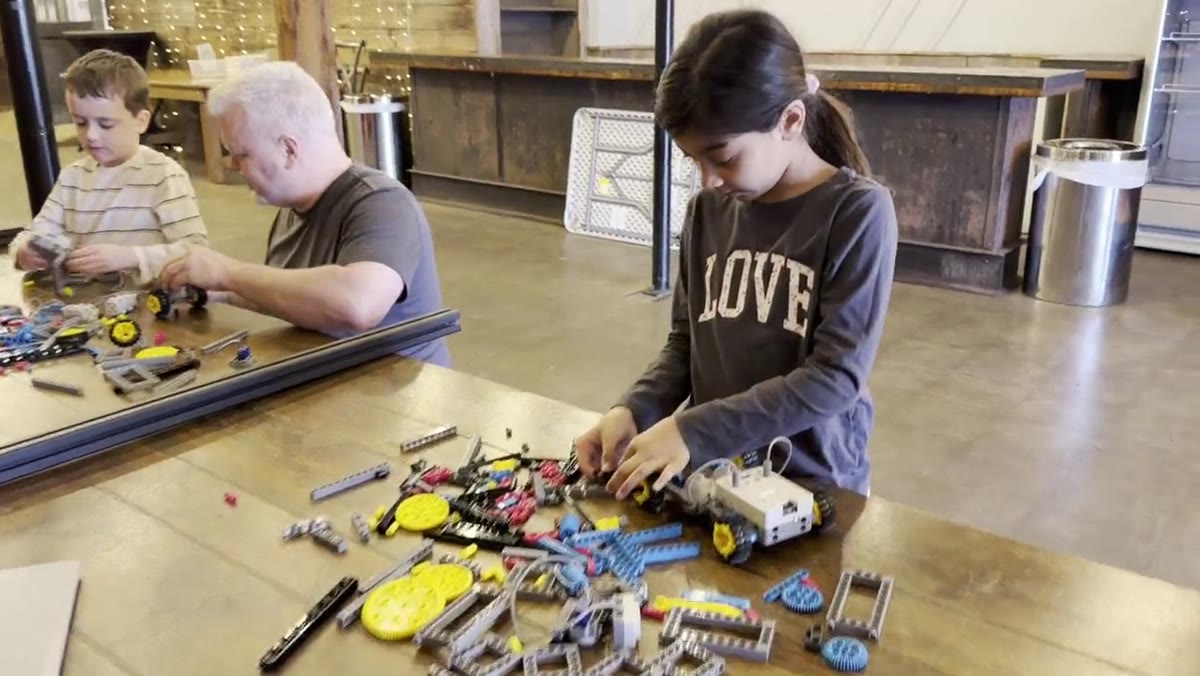
★ IntroGrade 3–5
Intro to Robotics
What makes a robot a robot? Students compare manufacturing arms, Mars rovers, and household appliances, then build small models to identify power, sensors, controllers, and actuators.
A school-aligned robotics curriculum for grades 3–12. Real platforms — LEGO SPIKE, Arduino, Micro:bit. Run by working engineers in a pro-grade shop. We bring it to your classroom or host you in ours.
Every project uses a real, widely-supported robotics platform — the same kits robotics teachers, hobbyists, and engineers trust.
Block-based or Python. The backbone of our middle-school robotics builds — line followers, sensor labs, mission robots.
The high-school step up. Battle Bots, motor drivers, PWM, C/C++ — the same hardware engineers prototype on.
Block-based MakeCode entry point. Reaction timers, step counters, radio comms — coding fundamentals in 3 days.
Series, parallel, and logic-gate fundamentals. Design-a-Circuit night light builds that double as troubleshooting practice.
Simulate before you solder. Students debug code and test sensor thresholds virtually — saving the hardware for the real run.
Bambu A1 printers in-house. Students design replacement robot parts in Tinkercad, print, measure, iterate.
23 projects spanning grades 3 through 12. We've spotlighted nine below — the full curriculum is available as a PDF download.
What makes a robot a robot? Students compare manufacturing arms, Mars rovers, and household appliances, then build small models to identify power, sensors, controllers, and actuators.
Build a Micro:bit reaction timer that demonstrates the universal systems model. Compare open-loop and closed-loop control with everyday objects.
First Micro:bit programs: name badge, dice simulator, step counter. Plain-language intro to OS vs firmware. Block-based, no setup.
Build a two-motor driving base with a color sensor. Iterate from on/off control to proportional control to obstacle-aware. Timed run scored by the class.
Four-station rotation: ultrasonic, color, force, temperature. Students log readings and connect sensors to real robots — self-driving cars, warehouse bots, medical devices.
Design a sensor bracket, wheel hub, or claw tip in Tinkercad. Print on the Bambu A1. Measure with calipers. Discuss tolerances. Iterate.
Student-favorite intro to electronics manufacturing. Solder a small vibrating bug robot, troubleshoot with a multimeter, decorate, and race on a tilted track.
Week-long build: teams wire motor drivers to an Arduino chassis, write drive-control sketches, tune response curves, and battle in a tournament. Three test-and-reengineer cycles before the final.
Construct a working hydraulic robotic arm with syringes and tubing. Calculate mechanical advantage. Compare hydraulics vs pneumatics. Move objects in a timed challenge.
Teams receive a mission ("retrieve sample from Zone C in under 60 seconds"), then design, build, program, test, score, and reengineer based on failure data. Three official runs. Full design defense.
Pick the format that fits — drop us into your classroom for a unit, send a class to our shop, or sign up for an after-school or summer intensive.
We bring the kits, materials, and instructors. Single periods or multi-week units mapped to your curriculum.
Bring a class or grade level for a half-day or full-day robotics experience in our Alexandria maker space.
Weekly robotics clubs for districts running enrichment programs. Multi-session arcs that culminate in a build.
Week-long Battle Bots, RoboQuest, and capstone camps. Open to families, scouts, and school groups.
Every project is tagged to a robotics competency framework — from core systems and circuits through programming, mechanics, and creation/redesign. Teachers get a competency map. Students leave with portfolio evidence.